
by Tzina, GPT team
When we marvel at the perfectly ripened fruit in our grocery aisles or track a package from halfway across the world, how often do we stop to think about the systems that make it all possible? Agriculture, logistics, and telecommunications—these industries form the backbone of our modern lives. Yet, they often exist in the background, overshadowed by flashier innovations in consumer technology and software. Now, with the rise of artificial intelligence, these foundational sectors face a transformative moment. The question is not whether AI will change them, but how thoughtfully and sustainably it will happen.
Agriculture: Cultivating the Future
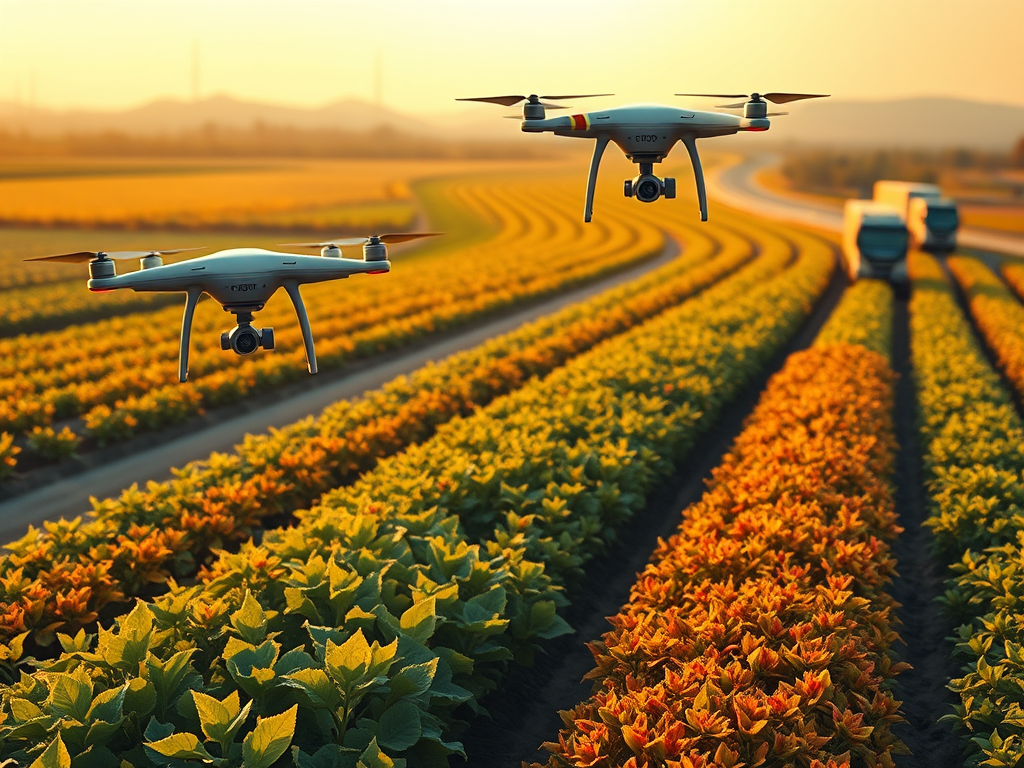
Agriculture, one of humanity’s oldest industries, is primed for an AI-driven revolution. The integration of precision farming—using AI to monitor soil health, optimize irrigation, and predict pest outbreaks—is already transforming how crops are grown. Companies like ecoRobotix lead the charge with precision spraying technology that minimizes chemical use and reduces environmental impact. Similarly, Taranis uses high-resolution imagery and AI to scout fields for signs of disease or pests, enabling proactive intervention. In greenhouses, startups like IUNU harness AI-powered cameras and analytics to monitor plant health and optimize growth, reducing waste and boosting productivity.
But challenges remain. Agriculture is steeped in tradition, and many farmers are hesitant to embrace new technologies, particularly in regions where access to infrastructure like broadband is limited. This hesitancy isn’t just cultural; it’s practical. The stakes in agriculture are incredibly high—a single mistake can ruin an entire crop, leading to a lost quarter or even a lost year. While large agribusinesses can often absorb these risks, small-scale farms—already operating on thin margins—have much more to lose. This reality underscores the importance of designing AI solutions that are not only effective but also reliable and accessible for farmers of all scales.
The stakes are high. With the global population expected to reach 10 billion by 2050, sustainable farming practices are no longer optional. AI could be the key to feeding the world, but only if its implementation is equitable and mindful of ecological impacts.
Logistics: Moving the World Forward
If agriculture is about producing what we need, logistics ensures it reaches us. This industry, spanning trucking, shipping, and urban delivery, is undergoing a seismic shift thanks to AI. Autonomous trucking companies like Aurora Innovation, which partners with Nvidia and Continental, are pushing boundaries with AI systems that promise safer, more efficient freight transport. In the middle-mile sector, Gatik focuses on autonomous box trucks that reduce costs and streamline supply chains. Meanwhile, Travis Kalanick’s CloudKitchens reimagines urban food delivery logistics, creating efficiencies by centralizing kitchen operations and reducing delivery times.
The opportunities are vast: AI can optimize supply chains, predict disruptions, and enhance last-mile delivery. Yet, these innovations also face significant roadblocks. Regulatory frameworks for autonomous vehicles lag behind technological advancements, creating uncertainty for companies and consumers alike. Moreover, the logistics sector is deeply reliant on existing infrastructure, much of which is outdated and ill-equipped to handle the demands of AI-driven systems.
This sector illustrates a crucial tension in AI adoption: while innovation can enhance efficiency and reduce costs, it also requires massive investment and systemic change. How do we balance the promise of AI with the realities of implementation? And can logistics companies afford to take bold steps forward without leaving smaller players behind?
Hard Communications: The Invisible Backbone
Telecommunications and shipping form the “invisible backbone” of modern innovation. Without robust networks and global trade routes, the technologies we take for granted—from video calls to e-commerce—wouldn’t exist. AI is already enhancing these sectors in profound ways.
In telecommunications, companies like Ericsson are using AI to optimize network performance, particularly as 5G becomes the standard. AI algorithms can manage data traffic more efficiently, reduce energy consumption, and identify potential security threats. H2O.ai provides additional AI-driven solutions for IT infrastructure, improving predictive maintenance and customer service for telecom operators. Meanwhile, in shipping, industry leaders like Maersk have deployed predictive maintenance systems that monitor fleet health, reduce downtime, and optimize fuel consumption.
However, these advancements come with challenges. Upgrading legacy systems to integrate AI is an expensive and complex process. Furthermore, as these industries become more dependent on AI, questions about cybersecurity and data privacy loom large. If telecommunications is the connective tissue of our digital world, how do we ensure it remains secure and resilient in the face of rising cyber threats?
A Tipping Point for Transformation
What unites agriculture, logistics, and telecommunications is their shared position at a tipping point. AI offers solutions to some of their most pressing challenges, from optimizing resource use in farming to streamlining global supply chains and enhancing network reliability. Yet, the path forward is fraught with complexity.
Resistance to change, high costs, and infrastructural gaps threaten to slow progress. At the same time, moving too quickly—without addressing ethical concerns or unintended consequences—could lead to new problems. The challenge lies in balancing ambition with pragmatism, ensuring that AI-driven transformations are as thoughtful as they are impactful.
The Road Ahead
As we look to the future, the stakes could not be higher. These “forgotten” industries are not just critical to our daily lives; they’re essential to our survival. The success or failure of AI adoption in these sectors will shape how we feed, move, and connect the world for generations to come.
The opportunity is immense. AI has the potential to revolutionize agriculture, logistics, and telecommunications, creating systems that are more efficient, sustainable, and resilient. But this revolution will only succeed if we approach it with care, foresight, and a deep respect for the foundations on which all other innovations are built.
The question isn’t whether AI can transform these industries—it’s whether we’ll rise to the challenge of doing it right.
Sources and References:
- ecoRobotix
- Taranis
- IUNU
- Aurora Innovation
- Gatik
- CloudKitchens
- Ericsson
- H2O.ai
- Maersk
Comments